What ASC Provides
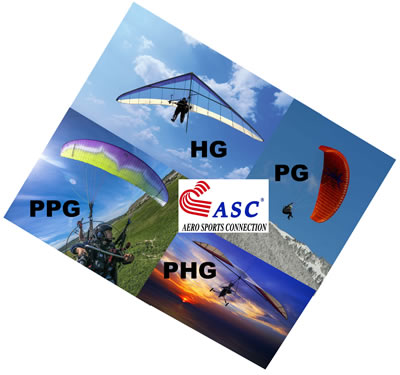
Aero Sports Connection, Inc. (ASC) was designed to provide an innovative, all-inclusive, and flexible support structure to serve the unique needs of light sport aviation. The support structure of ASC provides:
- Exemption Management.
- Vehicle Registration Management.
- Pilot Registration.
- Competition Recording.
- National Magazine.
- Membership Renewal.
- Wing Structure with as few as 25 members to provide national organization status to meet the individual vehicle types‟ and areas‟ unique needs.
- Management Services, and more.
Largest Training Exemption — 2004
ASC was the largest of all training exemptions in 2004 with over:
- 2700 Instructors
- 1340 Powered Parachute.
- 516 Fixed Wing.
- 330 Trike.
- 45 Powered Paraglider.
- 18 Gyro.
- 2 Powered Lighter-than-Air.
- 2.5 Million Hours of Flight Experience including 250,000 hours of flight training time and 900,000 hours of Ultralight.
ASC's reputation for responsible operation under the Federal Aviation Administration (FAA) Exemption is exemplary. The FAA often references ASC's system as “very effective and responsible.”
About Our Founder & President — James G. Stephenson
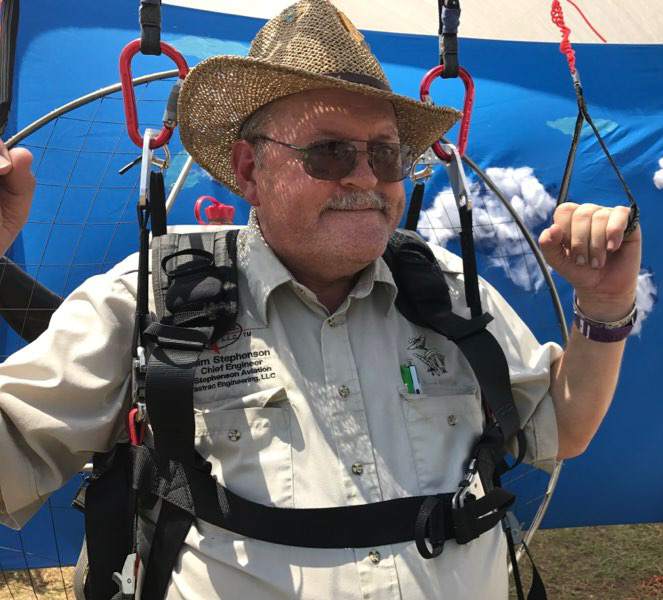
Jim Stephenson's Key Highlights:
- Aviation Veteran: Jim's aviation journey commenced in 1969, and his extensive experience encompasses various certifications, including PPsel, CFIppc, glider (gl), and more.
- ASTM Standards: He is a prominent contributor to ASTM SLSA Standards, influencing the direction of the industry.
- ASC Leadership: For 29 years, Jim has been at the helm as President/CEO of Aero Sports Connection, Inc. He holds the distinction of being the exemption holder for the largest number of aviation instructors.
- Training Program Architect: Jim's vision led to the development of the ASC training program and advanced systems, streamlining national operations.
- Aviation Governance: As a member of the Aviation Rulemaking Advisory Committee on FAR Part 103, he actively shapes aviation regulations.
- Aircraft Ownership: Jim has owned and operated two "Lighter-than-pilot" aircraft, the Lazair and Quicksilver E model.
- Space Shuttle Contribution: He applied his engineering expertise to support the "heavier-than-heck" Space Shuttle.
- Prolific Author: With over 600 articles, editorials, and presentations, Jim has shared his knowledge generously.
- Volunteer Commitment: Remarkably, Jim manages ASC on a volunteer basis, a testament to his dedication to the aviation community.
Chronology Highlights Of ASC
1995
- ASC's first Nationals is the largest in Ultralight History and is held at the site of the first ever ultralight competition - Marshall, Michigan.
- ASC opens Club Cross Country Competition System.
- ASC receives FAA Exemption No. 6080 for two-place trainers (the first of over 11 FAA exemptions to support training). This exemption is designed to apply to all light aviation trainers. Limits of the exemption are:
- 496 pounds empty weight.
- 10 gallons of fuel.
- 35 knots stall speed.
- 75 knots maximum straight level full power speed.
1996
- ASC helps frame and develop Sport Pilot proposal from outside the Aviation Rulemaking Advisory Committee (ARAC.)
- Concepts submitted by ASC become the basis for FAA response to ARAC.
- ASC Nationals expands to 3 days on Labor Day Weekend, grows as the only free event of its kind.
1997
- Teaming Agreement signed with Experimental Aircraft Association (EAA) to adapt ASC‟s Basic Flight Instructor (BFI) Program to non-Certified Flight Instructors (non-CFI‟s).
- ASC develops Peer Review System, now used as a model for EAA efforts.
- ASC invited to participate in the ARAC and aid in further development of Sport Pilot Rule.
- ASC completes research to verify that the accepted training requirements are appropriate.
- ASC Nationals includes Powered Parachutes as a class of competition.
1998
- ASC Nationals includes Powered Para Gliders and flies off six simultaneous runways at Marshall, Michigan.
- EAA Cooperative Teaming Agreement adapted to help EAA and continue close interaction.
- ARAC results to FAA to recommend change that becomes Sport Pilot.
- ASC Nationals expanded to 4 days.
1999
- ASC fosters a new magazine, Aero Connections, to promote communication with members.
- ASC Nationals includes skydivers and glider towing, in a mixed pattern display, used by FAA as an example of outstanding no-radio operations.
2000
- ASC reinvents the Event Support Kit with useful and instructive materials and supplies to support first-time events.
- ASC Nationals and grass-roots support expands with ASC personnel on-site at over 30 events nationwide.
- ASC receives FAA Exemption No. 7390 for transitional training in experimental aircraft.
2001
- ASC becomes instrumental in helping the FAA develop transition plans, concepts and ancillary rules for Sport Pilot to work in a proper format.
- ASC Nationals, held the previous year at the Marshall site, sees membership vote on site relocation.
- Fixed Wing and Powered Parachute Champions crowned.
2002
- Jim Stephenson, President and CEO of ASC, chairs Powered Parachute Light Sport Aircraft Committee for ASTM International Consensus Standards.
- ASC expands Competition Event Support Kits with more value and support. Over 30 organizers registered for these kits, totaling more than $12,000 in direct support.
- ASC Nationals at Three Rivers, Michigan is the largest ever, with over 35 vendors, 15,000 guests and 400 planes.
2003
- Powered Parachute Light Sport Aircraft Committee led by ASC is the first ASTM International Committee to complete the release of all five Consensus Standards Specifications, four of which are being considered to possibly cross types.
- ASC leads in the development of research exemption concepts for FAR Part 103.
2004
- LTA Light Sport Aircraft Committee led by ASC is the second ASTM International Committee to complete the release of all five Consensus Standards Specifications.
- ASC contributes to Sport Pilot reviews and support documents.
2005
- Light Sport Aircraft Committee of ASTM International works to complete the standards for all types. ASC is a leader in definition and support.
- ASC leads in the development of research exemption concepts for FAR Part 103.
- Jim Stephenson given the ASTM Leadership award, the first given to F37 Light-Sport Aircraft.
- Sport Pilot released in September 2005.
- ASC established „ASC International Wing‟ in November 2005.
2006
- Jim Stephenson given the ASTM award for Leadership.
- ASC authorized to present Light-Sport Repairmen Inspection classes and Certificates.
2007
- ASC comments to FAA proposed changes to Sport Pilot, opposing some.
2008
- ASC completes the largest training exemption in the US.
- ASC is awarded 2nd place in the annual Advantage Awards for “Light Sport Aviation Takes Flight on ASTM Internal Standards”.
- ASC receives PPG/PG dual training exemption.
2009
- ASC files exemption requests for three key areas of Sport Pilot transition.
- AERO CONNECTIONS is published as an Emagazine on ASC website in May.
2010
- FAA changes to Sport Pilot drop 7 of 22, remainder is generally in line with ASC recommendations.
- ASC meets the needs of the times and offers a new ASC license and rating card, initiated by ASC International Wing, initialized in 2009 and realized in January 2010.
- 30th Anniversary of Ultralight aviation held at Sun n‟ Fun.
Have something to add to our history? Send us an e-mail through our Contact Us page!